
Introduction
UPI 3.0 – How Digital Payments Are Changing Money in IndiaIf there is one financial innovation that has transformed the way Indians deal with money, it is the Unified Payments Interface (UPI). From paying for vegetables at a local kirana shop to sending money instantly to a friend, UPI has become the backbone of India’s digital economy.
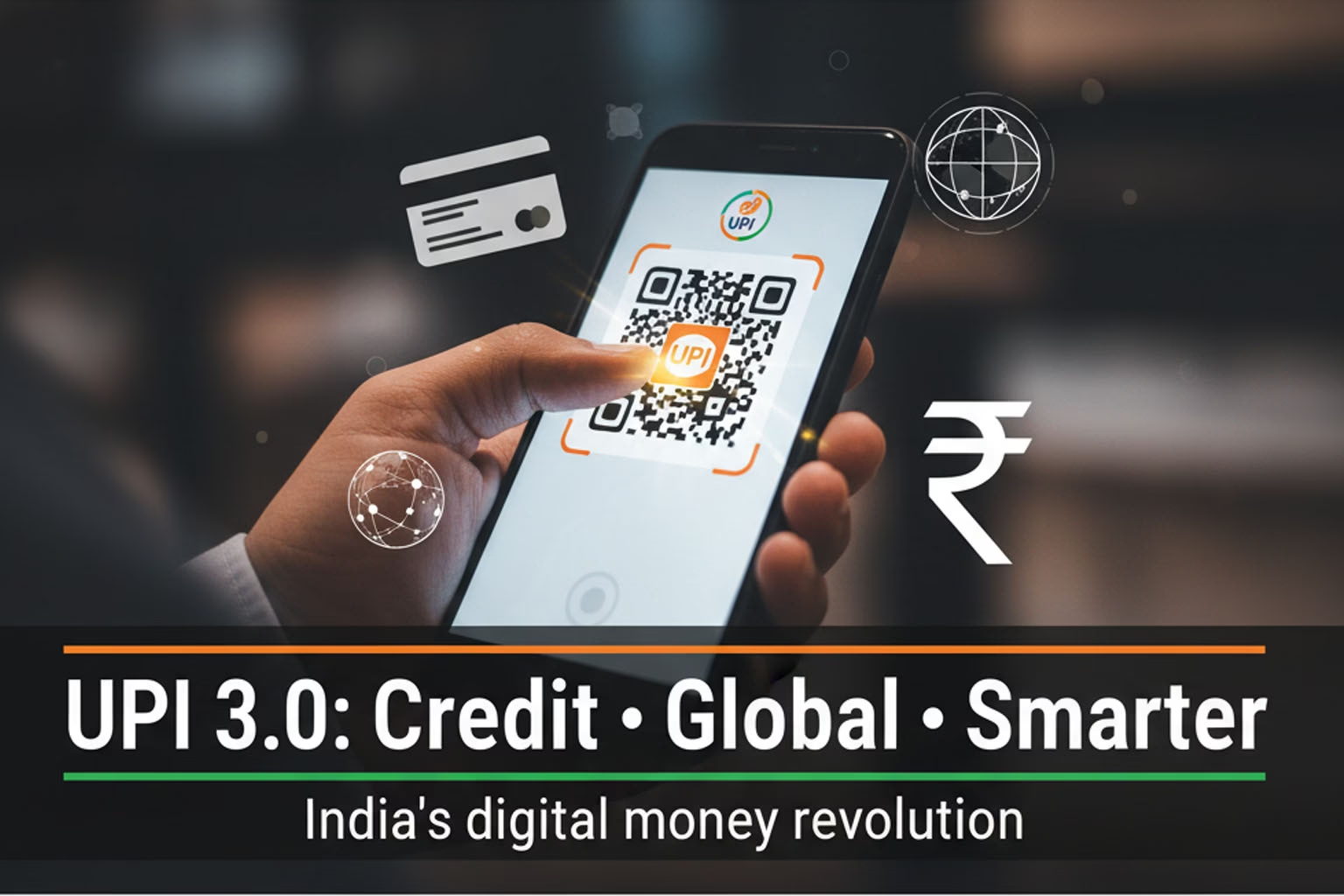
Now, in 2025, we have entered the era of UPI 3.0 — a new version of the payments system that promises to make digital transactions faster, safer, and more powerful than ever before.
But what exactly is UPI 3.0? What’s new compared to UPI 2.0? And how will it change the way we save, spend, and borrow money in India?
Let’s break it down.
Evolution of UPI in India
- UPI 1.0 (2016): Basic fund transfers between banks using mobile apps.
- UPI 2.0 (2018): Added features like overdraft accounts, signed mandates, and invoices in inbox.
- UPI Lite (2022): Small-value offline payments without internet.
- UPI 123PAY (2022): UPI for feature phones.
- UPI 3.0 (2025): Advanced features like credit on UPI, recurring payments, international transactions, and much more.
In less than a decade, UPI has grown from a new experiment to handling over 14 billion transactions per month (2025).
What’s New in UPI 3.0?
- Credit on UPI
- You can now link credit cards and credit lines directly to UPI.
- Pay through UPI but from credit, not just your savings account.
- Example: Scan a QR code at a shop → Pay using your RuPay credit card via UPI.
- Recurring AutoPay 2.0
- Subscription services (OTT, insurance premiums, SIPs) can be paid automatically.
- Improved mandate management, higher limits, and better security.
- International UPI Payments
- Pay seamlessly abroad in countries that accept UPI.
- Already live in UAE, Singapore, Mauritius, Sri Lanka; more countries are joining.
- Offline UPI 2.0
- Payments without internet using NFC and SMS-based approvals.
- Helps in rural and remote areas.
- Enhanced Fraud Protection
- AI-based fraud detection.
- Mandatory confirmations for high-value transactions.
- Integration with Digital Lending
- Instant micro-loans can be disbursed via UPI-linked accounts.
Why UPI 3.0 Matters for Indians
- Wider Credit Access
- Millions of Indians without credit cards will now get access to credit-on-UPI.
- This is a game-changer for small businesses and middle-class consumers.
- Simpler Recurring Payments
- From Netflix subscriptions to SIP in mutual funds, payments can be automated securely.
- Global Reach
- Indian tourists, students, and NRIs can use UPI abroad instead of carrying forex cash.
- Boost for MSMEs
- Small shopkeepers can now accept international payments easily.
- Financial Inclusion
- UPI 3.0 brings banking services to people with only basic phones or poor connectivity.
Benefits of UPI 3.0 for Different Users
- Consumers: More convenience, better access to credit, seamless global payments.
- Small Businesses: Lower cost, instant settlement, access to micro-credit.
- Banks: Reduced cash handling, new credit opportunities.
- Government: Boost to digital economy, reduced black money circulation.
Risks and Challenges
- Fraud & Scams
- As UPI grows, so do phishing and fraud attempts.
- Need for stronger cyber-security and awareness campaigns.
- Over-reliance on Credit
- Easy credit-on-UPI may push people into overspending and debt traps.
- Infrastructure Load
- Billions of transactions per day require robust server capacity.
- Data Privacy Concerns
- More transactions → more sensitive financial data to protect.
UPI 3.0 vs Credit/Debit Cards
| Feature | UPI 3.0 | Credit/Debit Cards |
|---|---|---|
| Acceptance | Growing globally | Widely accepted worldwide |
| Cost | Free / minimal charges | MDR charges on merchants |
| Ease of Use | QR scan, phone-based | Card swipe, PIN |
| Rewards | Limited (depends on banks) | Cashback, points |
| Credit Access | Credit on UPI (new) | Credit cards only |
How UPI 3.0 Impacts Investments
Here’s an interesting angle for retail investors:
- SIP Payments via UPI Autopay: Mutual fund SIPs and insurance premiums can be paid seamlessly.
- Micro-Investing: Apps may allow ₹10–₹100 daily investments via UPI.
- P2P Lending & Digital Loans: Instant disbursal and repayment through UPI-linked accounts.
This could encourage more young Indians to start investing earlier.
Future of UPI – What’s Next?
- UPI 4.0 (expected by 2027): Integration with CBDC (Central Bank Digital Currency).
- Cross-border trade payments: Indian exporters could get paid in UPI directly.
- Voice-enabled UPI: Pay using voice assistants in Indian languages.
The vision is simple: make UPI the default payment system of the world.
FAQs
Q1. Is UPI 3.0 free to use?
➡️ Yes, for consumers. Merchants may pay minimal charges depending on the transaction type.
Q2. Can I use UPI abroad now?
➡️ Yes, in select countries like Singapore, UAE, Mauritius, Sri Lanka, and more being added.
Q3. Is UPI 3.0 safe?
➡️ Yes, with enhanced fraud detection. But users must remain cautious of scams.
Q4. Do I need to download a new app?
➡️ No. Existing apps like PhonePe, Google Pay, Paytm, and BHIM will upgrade to UPI 3.0 features.
Conclusion
UPI 3.0 is not just an upgrade — it’s a financial revolution. By combining instant payments, credit access, global usability, and automation, UPI 3.0 is turning India into a cashless powerhouse.
For consumers, it means more convenience and financial flexibility. For small businesses, it means cheaper, faster transactions. For India as a nation, it cements our position as a global leader in digital payments.
Just like mobile phones became universal in the 2000s, UPI is becoming the default wallet of India. And UPI 3.0 is the next big leap forward.
Also read: Jio BlackRock Mutual Fund 2025: SIP & Direct Plans Explained
📞 Stay Connected with Money Advisor
📧 Email: moneyadvisorin.fin@gmail.com
📱 Mobile: +91 95797 51533
🌐 Website: www.moneyadvisor.in
💡 Join our newsletter for exclusive budget templates, investment checklists, and expert Q&As—click “Subscribe” now and take your first step toward financial freedom!
📢 Disclaimer: “Money Advisor is operated by a SEBI-registered Mutual Fund Distributor (ARN-129675). The content on this blog is for informational purposes only and should not be considered as investment advice. Mutual Fund investments are subject to market risks. Please read all scheme-related documents carefully.”